FMCG manufacturers face constant pressure to reduce downtime, cut waste, and improve line efficiency.
At Praucs, we deliver custom-engineered lubrication and line optimization solutions that go beyond standard lubrication — helping producers boost output and lower operational costs.
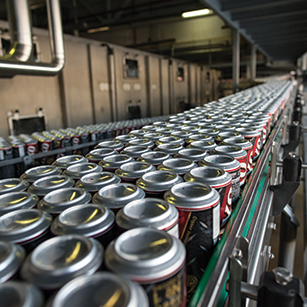
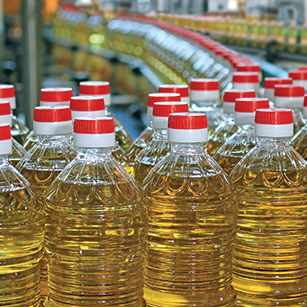
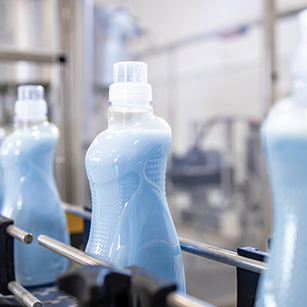
Our systems are designed for sustainable performance across complete filling lines in sectors including:
High-speed bottle instability is caused by uneven friction at two critical points:
With conventional dry lubrication systems using viscous lubricant additives, brushes, and spray nozzles, friction can vary from one conveyor to another. Because these solutions fail to lubricate the interface between the conveyor chain and the wear strip, they create micro-vibrations. These vibrations transfer directly from the conveyor surface to the bottles and intensify with container shape and height, ultimately causing the bottle to fall.
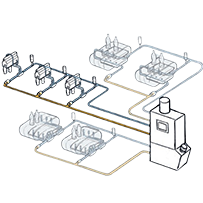
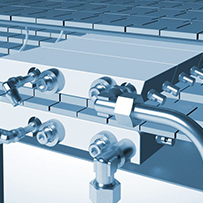
MicroDry® works differently. It applies a microscopic and uniform layer of DLT-333® , solid lubricant additives on both sides of the belt for continuous surface repair by filling the cracks due to dedicated nozzles for proper lubrication between the chain and the wear strip. The result is stable bottles transfer and controlled friction across the entire line.
Bottles pressure usually comes from friction levels between the bottle base and the conveyor, especially in curves, accumulation zones and speed changes causing jams, label damage, and unstable bottle flow.
Wet and dry lubrication can reduce friction, but often not in a stable way. Over-application, brush wear, or clogged spray nozzles create uneven friction which leads to pressure between bottles.
Praucs solves this differently by using MicroDry® precision lubrication technology. It applies a uniform microscopic layer of DLT-333® on the top and bottom of the conveyor chain using contact nozzles for belt surface and injection nozzles for the wear strip. This keeps the friction consistent across the line, reducing back pressure, jams and line stoppages.
Air conveyors run dry by design, so friction between the bottle neck ring and neck guides stays high on high-speed lines. This leads to faster guide wear, bottle jams, and higher blower energy consumption.
MicroDry® Air reduces this friction by applying a uniform microscopic layer of DLT-333® lubricant on the neck-guide contact surface. This allows smoother bottle movement with no jam, and less mechanical stress.
The result is longer neck-guide life (typically 2 to 4x), reduced maintenance and filter replacement. Blower speed requirements drop, delivering energy savings of up to 40%.
Conveyor lifespan is directly linked to uneven friction, inconsistent lubrication, and unstable bottle flow which accelerate wear on the belt, the drive motors, and the mechanical components.
Applying a DLT333® lubricant film on the return side of the belt rather than on the top surface only, reduces the load on chains, motors, wear strips and all moving parts, minimize unplanned downtime and maintenance, extending the overall conveyor lifespan significantly.
Chain and wear strip degradation is caused by direct friction between the chain links and the wear strip surface, worsened by uneven or excessive lubrication. The key is applying a consistent and stable, lubricant film across the entire chain contact surface. This reduces direct friction between the chain and wear strips, lowering mechanical stress, leading to extended component life and reduced maintenance frequency.
The most efficient water-free lubrication solution for high-speed bottling lines is to apply MicroDry® technology by using contact nozzles for the belt surface lubrication, and injection nozzles for the wear strip lubrication.
Unlike brush or spray nozzle-based dry systems that require regular calibration, maintenance and part replacement, a film-based lubrication system with DLT333® , delivers stable, controlled friction across the entire line while maintaining a completely dry factory floor.
Switching from wet lubrication requires no changes to your conveyors. You simply replace your existing lubrication system and keep running.
MicroDry® outperforms wet and conventional dry (brush/nozzle) lubrication across every key metric:
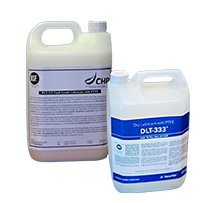
Praucs uses DLT333®, a high-performance dry conveyor lubricant developed for high-speed beverage and food production lines. It is FDA approved, NSF H1 certified, biodegradable, and completely water and silicone free.
Applied through MicroDry® technology, DLT333® creates a stable microscopic film between the bottle and the chain, and also between the chain and the wear strip. It reduces friction, back pressure, conveyor wear, and energy consumption without drip-off, or residue.
Compatible with PET, glass, cans, and carton bricks across dairy processing, juice lines, carbonated soft drinks, and bakeries machinery.
Applied in very low quantities, and precisely on the required zones, it helps maintain stable conveyor performance with zero water consumption.
Saving more on conveyor lubrication (True cost reduction) comes from spending less on lubricant, reducing conveyor maintenance, preventing line stoppage, and eliminating product damages.
An optimized lubrication solution must apply a long-lasting lubricant layer precisely where needed on both sides of the chain. This layer should not require frequent renewal cycles, and should not need high volumes of lubricant to renew itself.
MicroDry® is the only fully dry lubrication solution designed to combine all of these benefits together.
Praucs conducts a technical audit before every project: evaluating water and chemical usage, energy consumption, maintenance, downtime, consumables waste, asset lifespan, and overall line configuration.
This allows us to provide a realistic, site-specific ROI projection before any commitment.
Switching to MicroDry® typically delivers the following operating cost (OPEX) savings:
Praucs starts with a technical audit of the production line, evaluating water, chemical, and energy consumption, maintenance effort, downtime, consumable usage, asset lifespan, and overall line configuration.
Using this data, we calculate the potential savings and expected ROI for your specific production line.
We identify opportunities to reduce operating costs (OPEX) through lower resource consumption, reduced waste, less maintenance, and improved line stability.
The result is a realistic ROI assessment based on actual operating conditions, helping stakeholders quantify the financial benefits before implementation.
Wet lubrication creates water buildup, chemical residues, foam, and slippery floors around conveyors, fillers, and labelers, increasing hygiene risks, cleaning effort, and workplace safety concerns.
Dry lubrication eliminates all of this. No water, no spray mist, no foam. Floors stay dry, slip risks are reduced, and cleaning becomes simpler.
MicroDry® uses DLT-333®, FDA approved and NSF H1 certified, which does not support bacterial growth; directly supporting HACCP compliance and simplifying food safety audits.
MicroDry® drives cleaner, more resource-efficient operations by replacing conventional wet or semi-dry lubrication with a precise, microscopic dry lubrication system. It enhances sustainability and low environmental impact across several key areas:
Yes. For every lubrication project, Praucs manages the complete implementation process from engineering design and installation to commissioning and performance monitoring, typically completed within a few days without stopping production. Our support includes:
After commissioning, ongoing support is backed by CHP’s global service network, ensuring long-term technical reliability and spare parts availability for manufacturing plants.